Blog
What We Heard: Making AI Count in Canada
This was the central theme that emerged from The Case for Canada: Making AI Count, the Business Data Lab’s annual conference.

Share:




Canada doesn’t have an AI ambition problem. It has a measurement problem.
This was the central theme that emerged from The Case for Canada: Making AI Count, the Business Data Lab’s annual conference. The one-day event, held March 26 in Ottawa, brought together leaders from Statistics Canada, ISED, OECD, academia and industry to focus on a critical question: How do we move from AI potential to measurable economic impact?
Across keynotes, panels and a hands-on workshop, one message came through clearly: Canada cannot manage what it cannot measure.












From Hype to Economic Reality
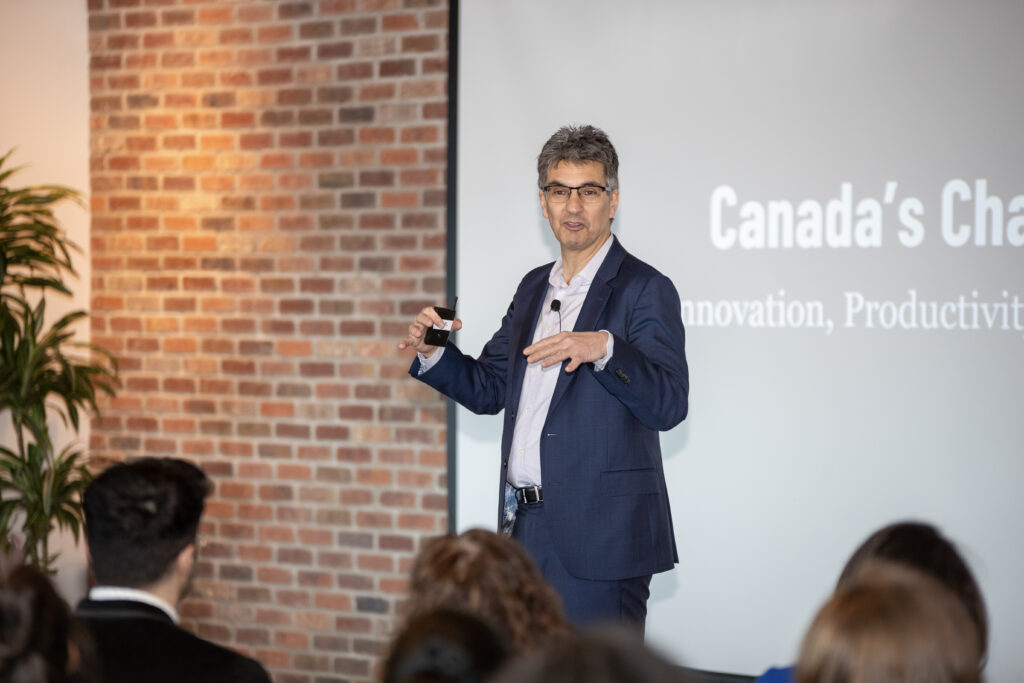
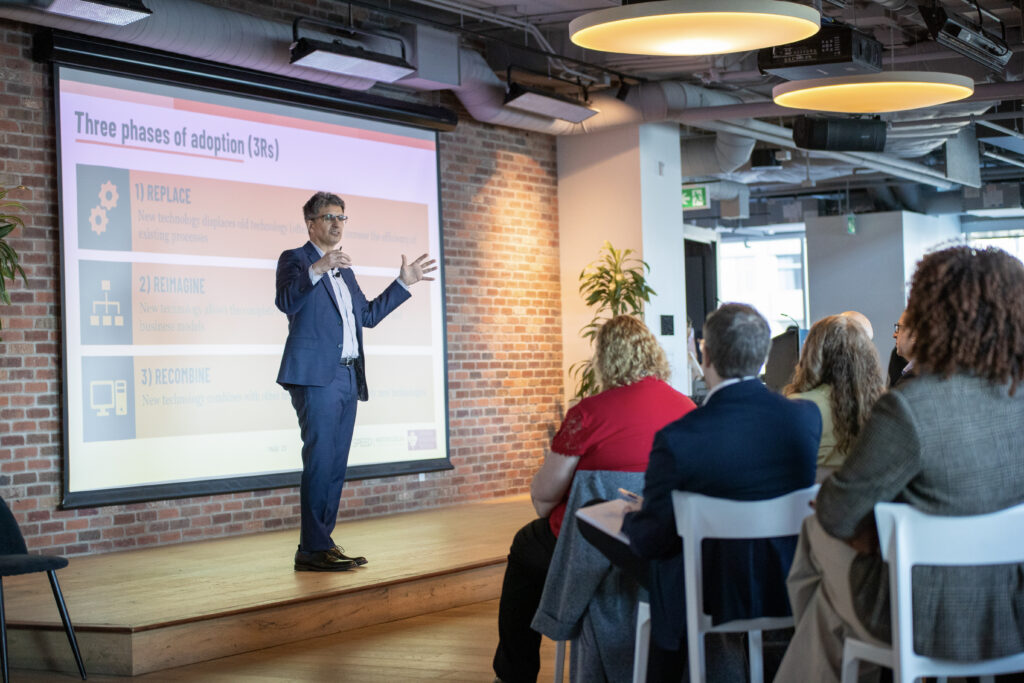
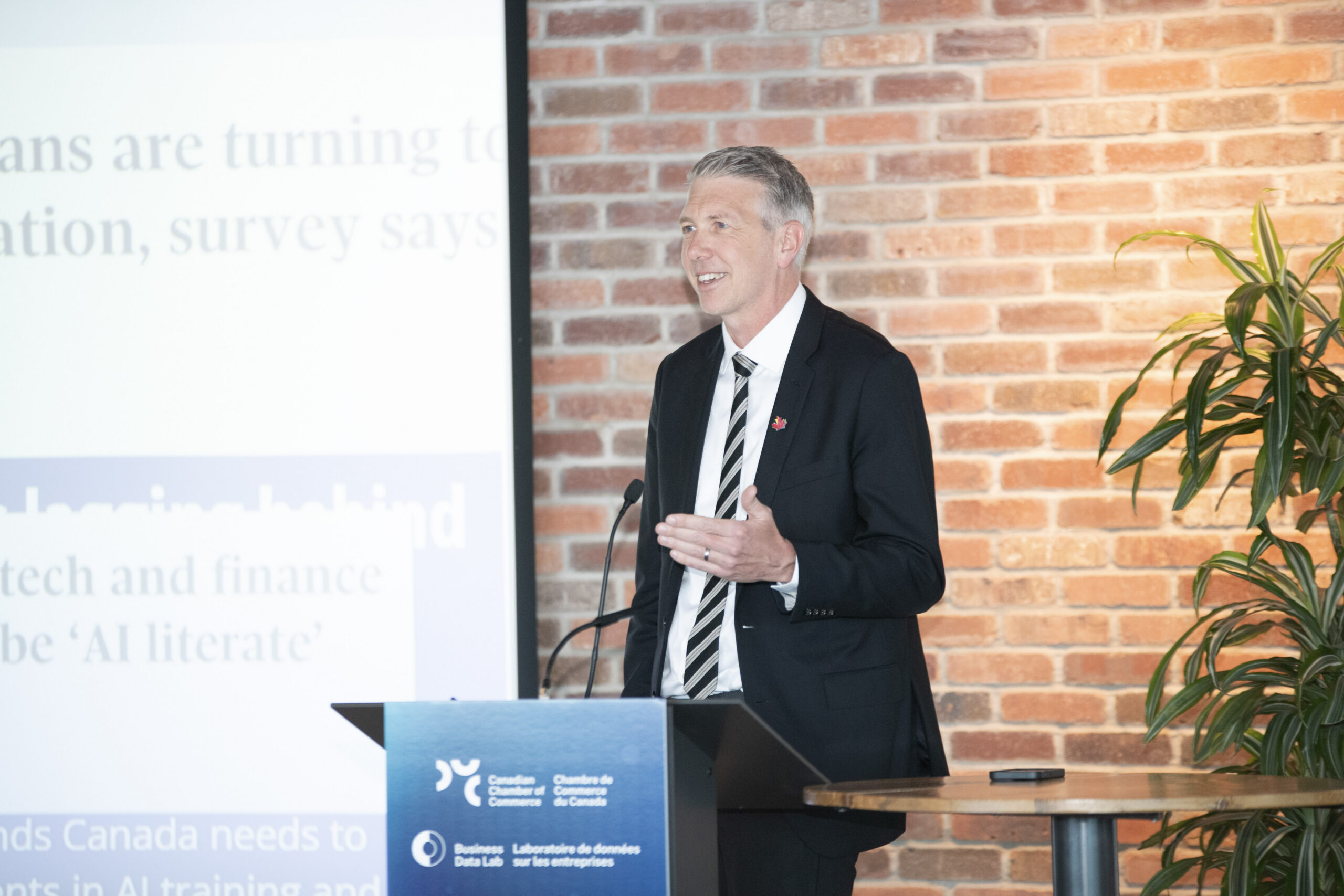
To open the day, Dr. Joel Blit, Associate Professor of Economies, University of Waterloo, and Senior Fellow, CIGI, grounded the conversation in a deeper economic reality.
Drawing on Polanyi’s insight that “we can know more than we can tell,” he explained how AI, particularly machine learning, captures tacit knowledge and makes it scalable. His “replace, reimagine, recombine” framework reframed AI not as a single disruption, but as a sequence of choices with the potential to reshape the economy in stages:
- Replace tasks to improve efficiency.
- Reimagine workflows and business models.
- Recombine technologies to create entirely new value.
While much of today’s focus is on automation, the larger opportunity lies in how firms redesign workflows, business models and industries. As with past technological shifts, early gains are uneven and often underestimated, while long-term impacts are significant.
The takeaway: Canada remains largely in the “replace” phase. The real gains will come from reimagining how work and firms are structured.
The Core Constraint: Measurement
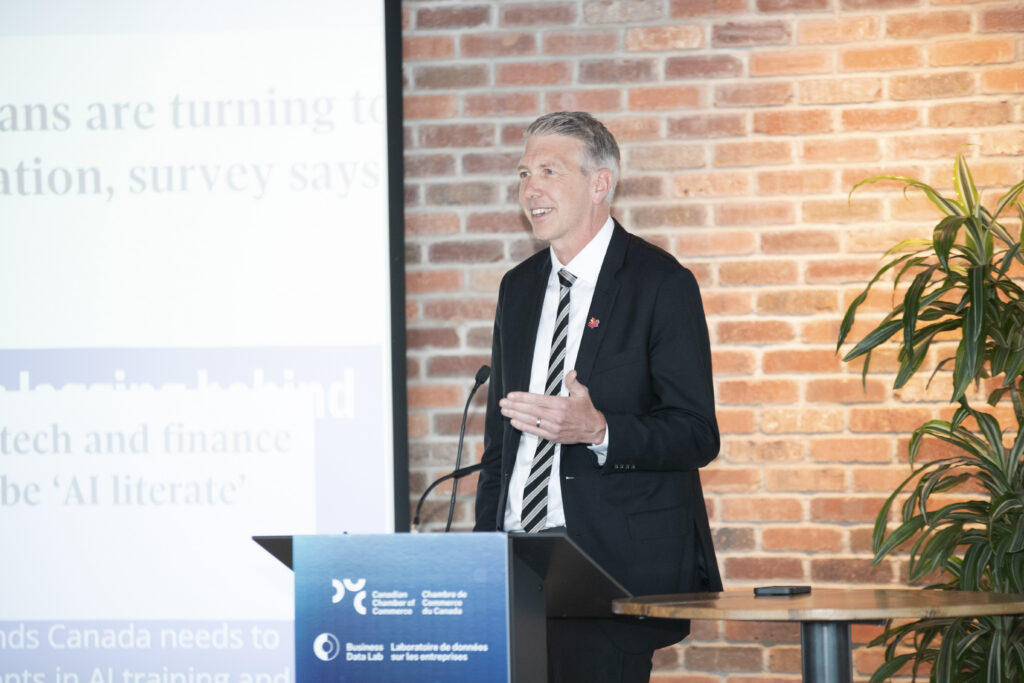

If AI is already reshaping the economy, why are the effects so difficult to see?
Mark Uhrbach, Chief of the Centre of Expertise for the Digital Economy, Statistics Canada, offered a behind-the-scenes look at how Canada is working to close the perception gap through TechStat, a national effort to modernize technology measurement.
Current statistical systems were not built to capture real-time, firm-level technological change. As a result, key decisions are often made with incomplete or lagging data.
TechStat aims to address this by developing coordinated indicators across firms, workers and governments, integrating new data sources and improving timeliness. The goal is not just more data but more usable data to inform policy, investment and strategy.
The implication is straightforward: If we cannot measure AI’s impact, we cannot effectively manage or scale it
Adoption Is Not Impact
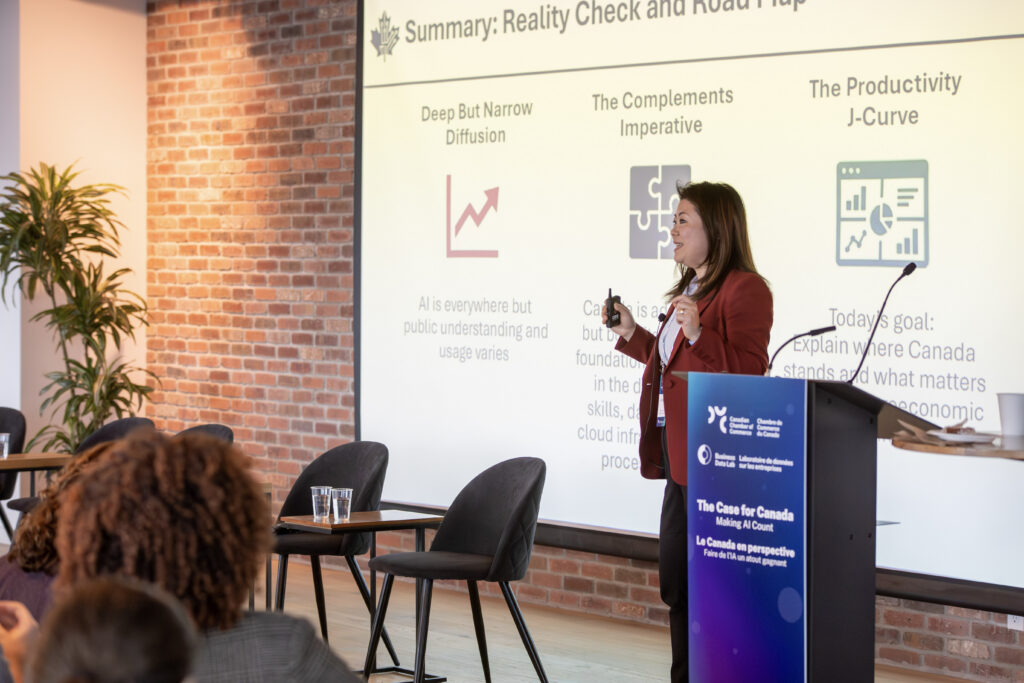


This challenge becomes more visible at the firm level.
Evidence presented by Dr. Jiang “Beryl” Li, Senior Project Leader, ISED, and explored further in Panel 1 with Shachi Kurl, President, Angus Reid Institute, Kristina McElheran, Associate Professor of Strategic Management, University of Toronto, Daniel Dufour, Vice President, Standardization Services, Standards Council of Canada, and Garry Ma, Founder and CEO, Ample Insight, highlighted a key distinction: AI adoption does not automatically translate into productivity gains.
Firms often experience an initial disruption phase with delayed returns. Real gains depend on complementary investments in skills, data infrastructure and organizational change.
As McElheran noted, “AI is an ingredient in a recipe.” Without the right inputs — process redesign, talent and strategy — the outcome falls short.
This helps explain a broader pattern. AI adoption in Canada remains concentrated among larger, more digitally advanced firms, raising concerns about uneven diffusion. At the same time, trust continues to shape both adoption and implementation.
Rethinking AI and the Labour Market


One of the most closely watched questions is how AI will affect jobs.
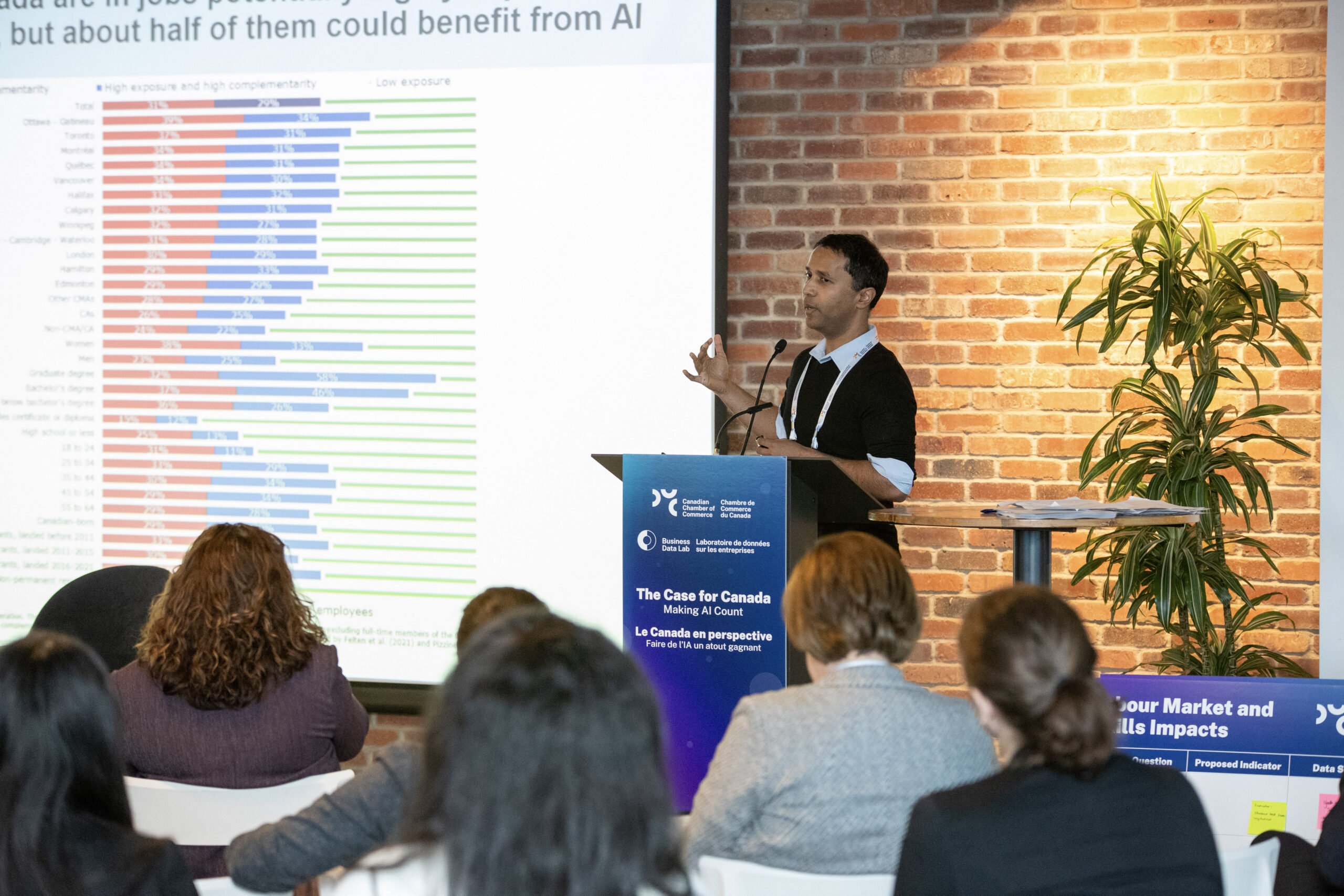
New evidence presented by Tahsin Mehdi, Senior Research Economist, Statistics Canada, challenges some common narratives. While many workers are in roles exposed to AI, there is no clear evidence yet of widespread job loss linked to adoption.
Instead, the labour market is evolving more gradually. AI is reshaping tasks within jobs, with a mix of augmentation and transformation. This shifts the focus — rather than asking which jobs will disappear, the more relevant question is how work itself is changing.
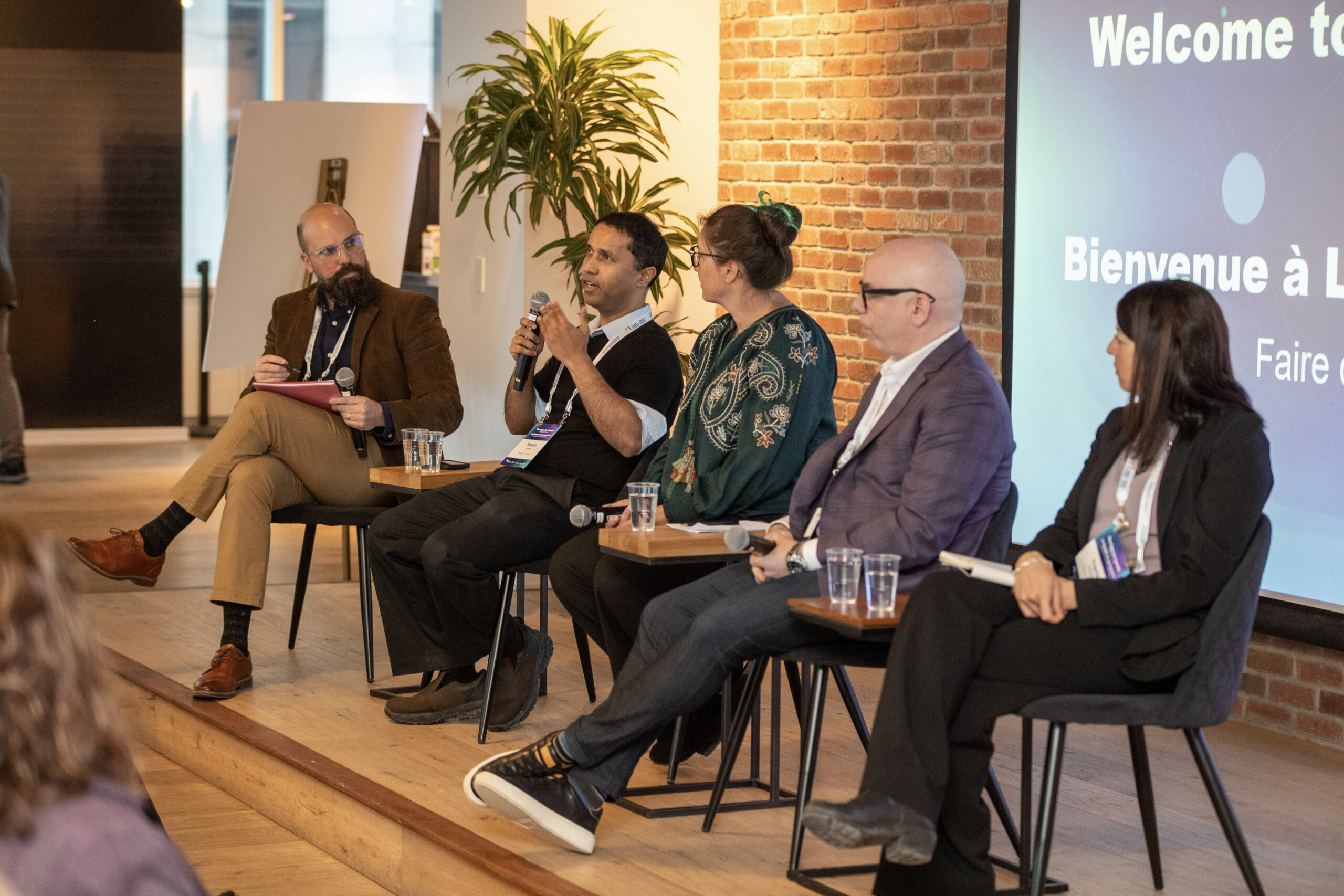
As discussed in Panel 2, with Mehdi, Sandrine Kergroach, Senior Economist and Policy Analyst, OECD, Edoardo De Martin, CEO and Co-founder, Industrio AI, Sapna Mahajan, Director, Policy and Partnerships, Genome Canada, and Patrick Gill, Vice President, Business Data Lab, Canadian Chamber of Commerce, understanding these changes requires moving beyond binary measures of job loss or creation toward more nuanced indicators of task composition, skill demand and job quality.
Building Canada’s AI Measurement Agenda



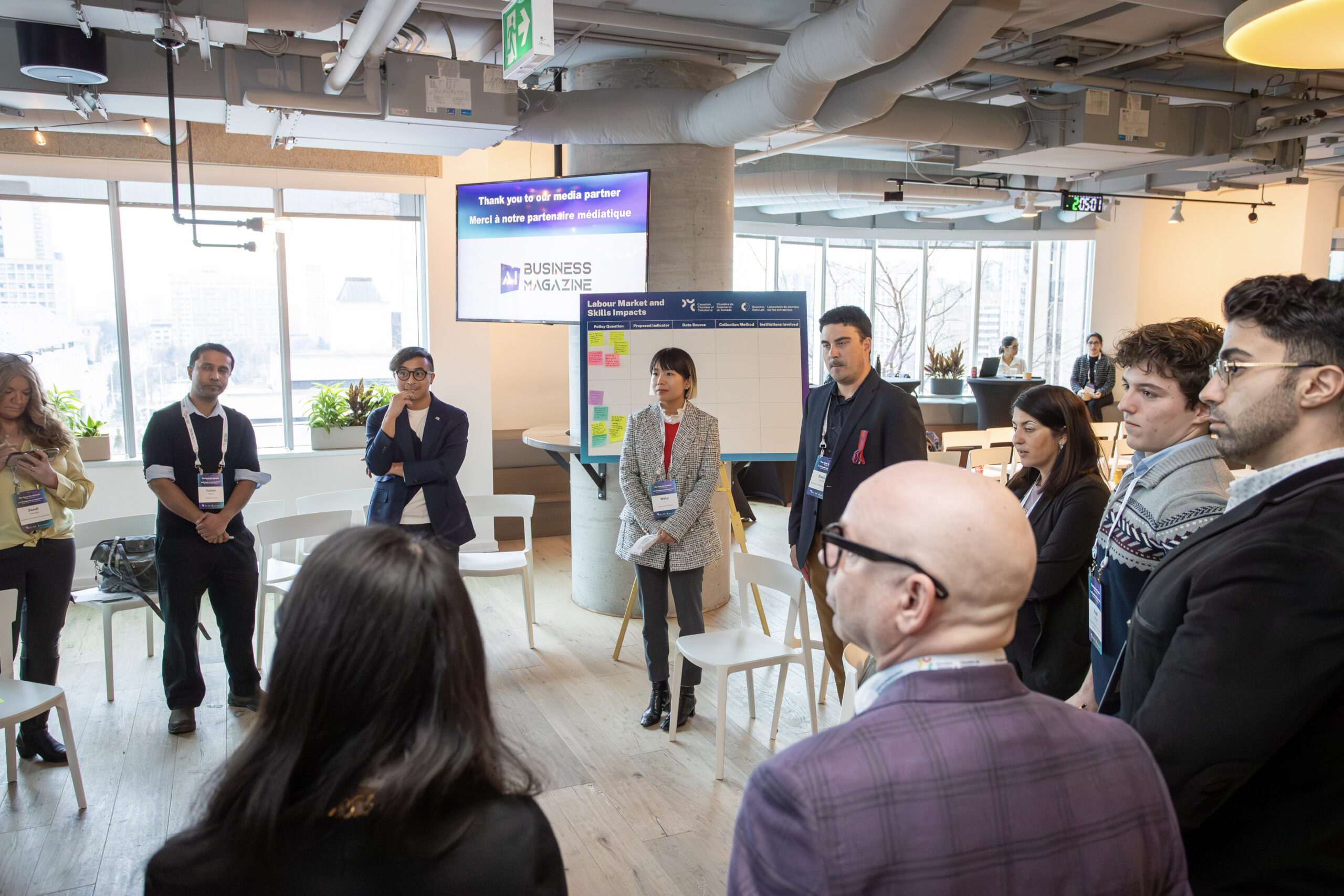
The most distinctive element of this year’s conference was not a keynote or panel but an interactive workshop.
In partnership with The Dais at Toronto Metropolitan University, participants worked through a structured process to identify what Canada should be measuring when it comes to AI.
The session focused on four core areas:
- AI adoption and diffusion.
- AI readiness and capability.
- Productivity and firm performance.
- Labour market and skills impacts.
During this working session, attendees moved from diagnosing the problem to actively designing solutions. Participants identified priority indicators, explored potential data sources and considered how measurement could be implemented in practice.
A key insight from the workshop was that Canada’s challenge is not just a lack of data but a lack of coherence. Data infrastructure exists, but it can be fragmented, lack adequate and consistent investment, and not align to the questions policymakers and businesses need answered.
Addressing this will require coordination across institutions, better integration of existing data sources, and new approaches to capturing firm- and worker-level dynamics.
Outputs from this session will inform ongoing work by The Dais and the Future Skills Centre to develop a national framework for measuring AI adoption and impact.
What Comes Next
If there was one overarching takeaway from the day, it is this: AI presents a historic opportunity to improve productivity and living standards. But without clear, credible and consistent measurement, that opportunity risks being misinterpreted, unevenly distributed or ultimately missed.
Making AI count means building the data, tools and frameworks, including the measurement frameworks, that will turn technological change into economic progress.
Thank You to Our Event Sponsor
Media Partner

Other Blogs

Policy Matters: Cybersecurity Is Everyone’s Business

Canada-U.S. Trade Has Entered Uncharted Territory. We’re Ready to Lead.