Blog
A Seed of Hope from the Canada–China Agreement
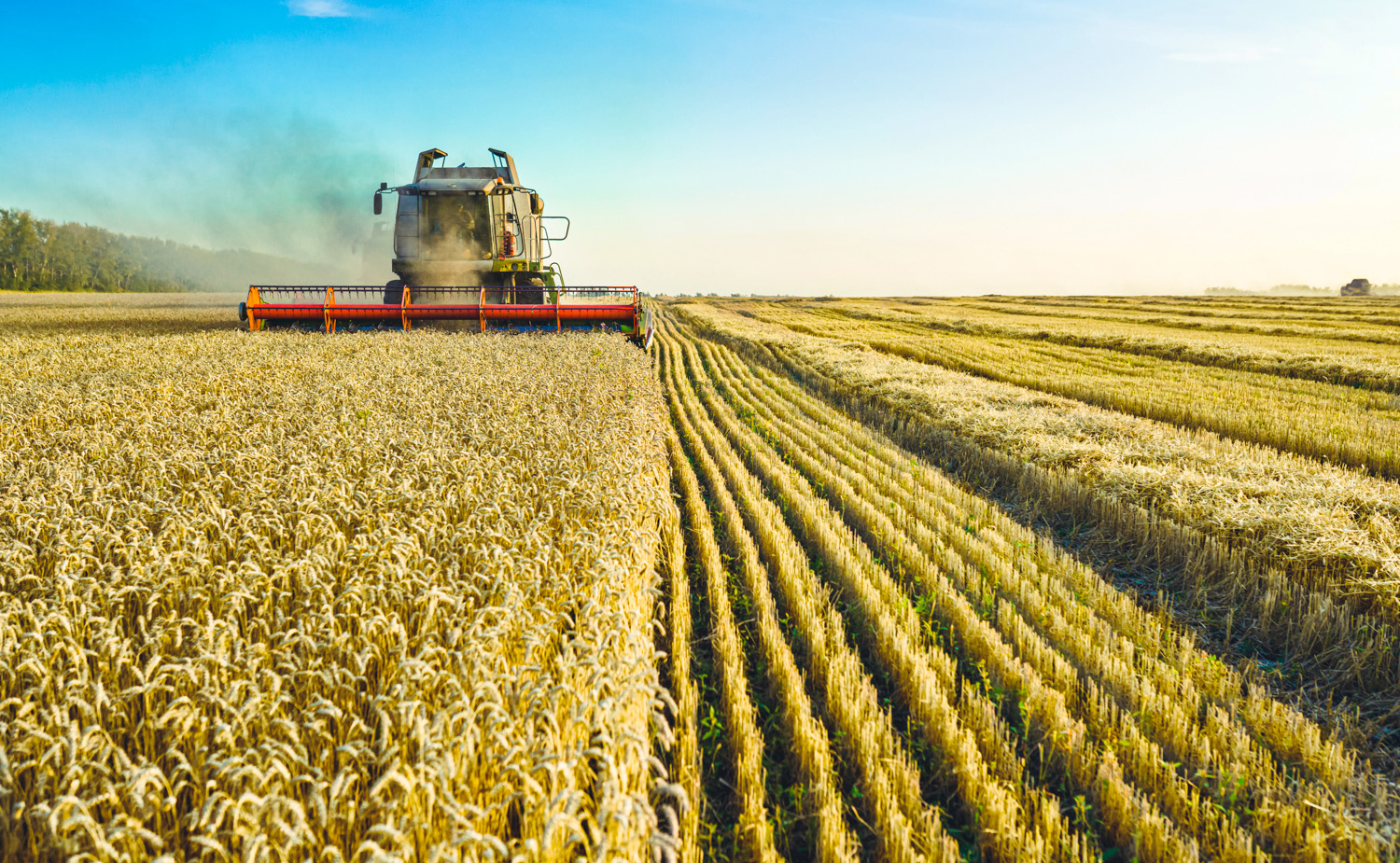
Agriculture remains the lifeblood of communities across this country. It sits at the nexus of trade, innovation, climate resilience, and economic security.
Share:




As published in the Saskatoon StarPhoenix, an English-only outlet.
Growing up on the family farm, geopolitics didn’t feature very prominently when listening to my dad talk about the business. His choice to plant a certain crop was made on its merits — soil conditions, rotations, weather, and paying the bills — not on global trade storms.
Farmers today don’t have geopolitics-free decisions.
During a recent family talk, my father told me, “I grow canola to sell and feed people, not to be used as leverage in politics.” And he’s right to feel that way.
That’s why the Canada–China agreement was so personal for farmers and producers across agricultural communities and coastal seafood sectors. It wasn’t far away or abstract. It was a weight, borne on behalf of an entire country, being lifted off people’s chests. Though time and gains were lost, the news offered hope that years of uncertainty might finally give way to an iota of stability.
Our natural Canadian humility may want to kick in here, telling us to assume meager gains from this deal for our modest, middle-power sector. That would be a mistake. Canada’s agricultural sector is a powerhouse. Agriculture and agri-food account for one in nine Canadian jobs and roughly seven per cent of GDP. That’s nothing to be bashful about.
In 2023, Canada ranked as the world’s fifth-largest exporter of agri-food and seafood products. While we may have slipped to a still respectable ninth place in 2024, even the ninth spot equals exports of over $100 billion to over 200 countries. Yet having the world’s second-largest economy shut its doors to us for a period of time turned our strength against us — and farmers felt that acutely.
For canola farmers in Saskatchewan, beef producers in Alberta, and seafood processors in Newfoundland, the lobbying that led to this agreement was existential. The fact that this agreement was endorsed jointly by Prime Minister Mark Carney and Saskatchewan Premier Scott Moe gives it durability and new direction. It doesn’t feel like a generic political win so much as a validation of a reality we too often overlook: The scale and sophistication of the agriculture and agri-food business and its importance in supporting Canada’s economic security.
When Agriculture Minister Heath MacDonald announced recently that China has already ordered 60,000 metric tonnes of Canadian canola seed, and that a shipment of Canadian beef would be headed to Chinese customers for the first time in years, that relief came full circle. Years of frustrated industry conversations and anxiety culminated in a renewed buyer relationship.
The speed of this turnaround was also surprising. Businesses benefiting from the agreement have seen an immediate change to their sales — a stark contrast to the daily conversations about broader economic transformation that will take decades to fully realize.
What’s striking now is the renewed sense that mutual market access is possible. Even sectors like pork, which remain unresolved, have described themselves as hopeful, recognizing progress when they see it. The broader sector has welcomed the door being opened, even an inch, for further dialogue.
None of this optimism erases a logical need for caution. The government is rightly assessing risk, including how it will manage EV imports and strengthen domestic auto manufacturing.
This “yes, and” approach matters. Our other markets, especially the United States, are not off the menu because the Canada–China relationship has found a stable structure in certain strategic areas.
Our 200 agricultural trading partners are worth cultivating. Nothing in business is riskier than having only one customer. That $100 billion in exports in 2024 wasn’t distributed evenly among our customers, nor should we pretend that it was. Our food ties to the United States remain deep at the same time the damage from the rift with China will soon show up in the 2025 numbers.
At the same time, climate pressures are intensifying with farmers already on the front lines. An often forgotten element of today’s agriculture is how much the modern farmer is also required to be a scientist or an engineer. Carbon sequestration and capture through agricultural production are among a farmer’s vocational requirements — and also some of our under-appreciated advantages. We deserve our global reputation as among the most advanced in sustainable agriculture. With our arable land and expertise across a wide range of crops and seafood products, we will increasingly be looked to as conditions worsen elsewhere, particularly in regions closer to the equator where growing certain foods may no longer be viable.
Agriculture remains the lifeblood of communities across this country. It sits at the nexus of trade, innovation, climate resilience, and economic security. Our trade advances with India, China, and Indonesia — countries with large populations — are squarely focused on where Canada has a true competitive advantage: farming, fertilizer, and feeding the world.
It could not be clearer who we are and what we contribute. Moments like this hit home. I have yet to fully debate with my dad the upheaval in geopolitics and its impacts on Canada’s prospects for feeding the world, but, today, I have a seed of hope.
Candace Laing, President and CEO, Canadian Chamber of Commerce
Visit the Agriculture and Agri-food Committee to learn more about the Canadian Chamber’s advocacy.
Other Blogs
Policy Matters: Canada’s Next Competitive Advantage Starts at Home
Five Priorities Canada Should Consider for the Next Agricultural Policy Framework