Share:




This blog was provided by National Maritime Group.
Strikes are becoming all too common
Across the supply chain, work stoppages caused by repeated breakdowns in collective bargaining have become all too common. In recent years, Canadians have endured damaging labour strikes in federally regulated sectors – aviation, courier, maritime and rail – that strain local economies, threaten jobs and impede the delivery of vital services.
The National Maritime Group (NMG) represents nearly 100 private-sector maritime employers who move 340 million tonnes of cargo annually, contributing to over 35,000 jobs. NMG members provide wages and benefits that support families and strengthen local communities across Canada.
While few would argue against the right to strike, most would agree it must be balanced with reasonable safeguards to protect workers, businesses and communities from widespread disruption. Practical tools are needed to keep parties at the bargaining table in good faith and to prevent disputes from escalating into prolonged work stoppages with far-reaching consequences.
Canadians feel the effects of each major labour disruption. When ports and railways stop, miners can’t move product to market, small family-run stores struggle to restock, distribution centres cut shifts, and workers lose hours and pay. The impact is immediate and local, and highlights the urgency for practical reforms to safeguard community resilience and stabilize supply chains.
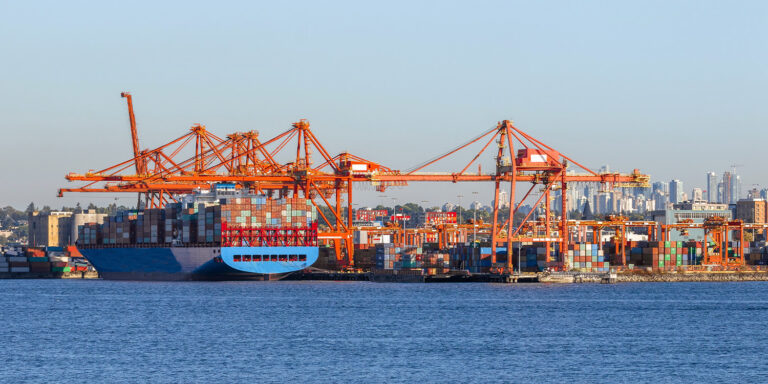
In summer 2023, a 13-day strike along Canada’s West Coast ports ground the economy to a near stand-still. Ports that would typically handle over $800 million of cargo daily – roughly 25 percent of Canada’s traded goods – were effectively shuttered, producing severe ripple effects across the broader economy.
Industrial Inquiry Commission on West Coast Ports
Following this dispute, the Minister of Labour announced the Industrial Inquiry Commission on West Coast Ports (IIC) to examine longshore bargaining structures and processes and recommend solutions that strengthen supply-chain stability. Preeminent labour relations experts, Vince Ready and Amanda Rogers, were appointed to lead this work.
After nearly two years of consultation and analysis, the IIC released its report earlier this year, concluding that the current bargaining structure “is broken but not beyond repair” and offering a roadmap for lasting stability and prosperity.
The report details seven important recommendations but one stands out for its broad applicability. Recommendation #2 calls for amending the Canada Labour Code to include Special Mediator provisions. If needed, a Special Mediator could be empowered beyond standard mediation processes to keep the parties at the bargaining table and, if appropriate, recommend a revised collective agreement to the Minister of Labour. During this process, strikes and lockouts would be paused.
At the National Maritime Group, we believe a Special Mediator is one tool that could support meaningful collective bargaining before picket lines are drawn, and industry shutdown follows. It would not remove the right to strike or lockout but rather offer additional support to maintain bargaining. Tools like this are intended to preserve workers’ rights while protecting household incomes and local economic stability. This is not a final solution in itself, but a positive step in the right direction.
Legislative change is needed now
The Prime Minister has rightly focused, in these early days of his mandate, on key investments in economic infrastructure, a development that the NMG and its members support. However, these investments become meaningless without labour stability. Infrastructure that grinds to a halt is not supporting economic development.
In just 15 months, collective bargaining at West Coast ports will begin again (alongside negotiations in other key industries within the supply chain). Now is the time to act in order to fully process legislative change.
We urge the government to bring industry and labour together by the end of October to work towards sensible reforms that protect jobs, paycheques and communities.
Other Blogs
Strengthening Logistics Corridors to Support Competitiveness

Policy Matters: What the Spring Economic Statement Means for Business